
Achieving Growth
IsBecoming
A 2025 HTL Africa Almanac


THE YEAR
AS AN INDEX




THE YEAR
IN WORDS


FROM THE STUDIO
By the time the year began to slow, it became clear that 2025 would not resolve itself neatly. There are years that announce their intentions early, loud, declarative, eager to be counted, and then there are years that resist summary, that insist on being felt rather than tallied. 2025 belonged to the latter. It unfolded less as a sequence of events and more as a sustained inquiry into how architecture holds, materially, socially, and ideologically, when pressed.
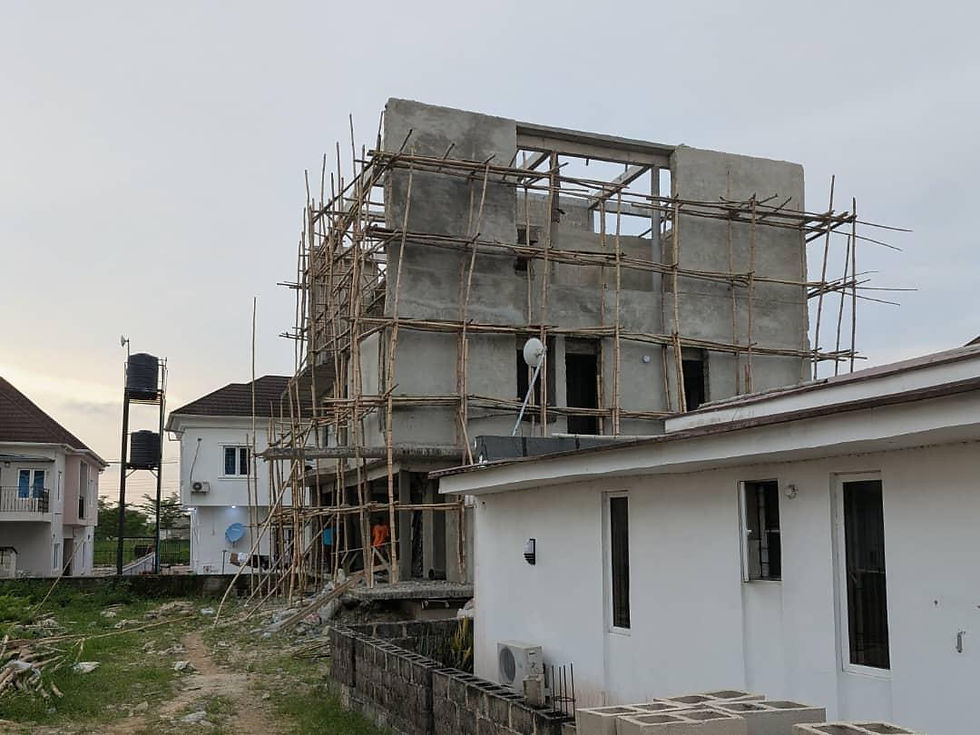
At HTL Africa, we have long been interested in architecture as a process of negotiation… further into the sky. By December, we found ourselves standing in Benin City… experimentation was required.
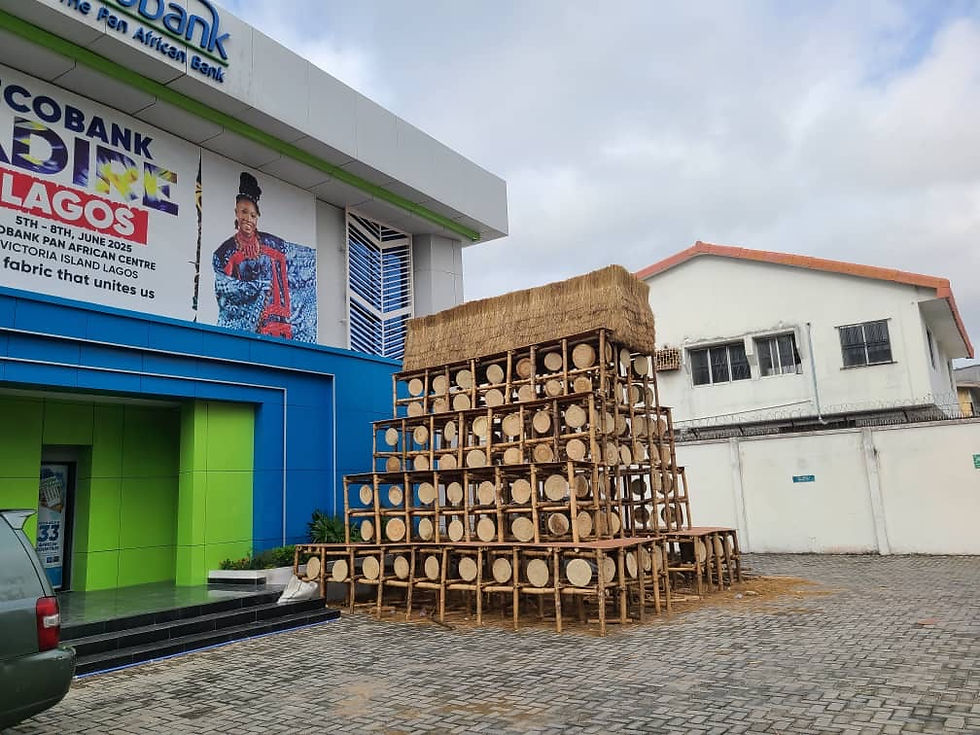
Bamboo, like cities, does not behave obediently. It bends, shifts, and occasionally fails. Earlier in the year, a pavilion collapsed under its own inquiry. And yet, failure proved instructive rather than terminal, a reminder that architecture advances not through avoidance of collapse, but through understanding it.
This spirit of testing… from abstraction to concrete.
What emerged was not an aesthetic exercise…quietly insisting on their relevance.
At the same time, the studio itself became a place of encounter. Conversations unfolded not as ceremonies, but as exchanges, with curators, educators, architects, and thinkers whose practices shape global design discourse. These moments mattered not because they conferred validation, but because they affirmed alignment, suggesting that the questions we are asking here resonate far beyond our immediate geography.
The year also reminded us that architecture does not end at the scale of buildings. Furniture, objects, and archives became parallel sites of inquiry. A table under fabrication asked what constitutes waste and what deserves permanence. Gabion desks questioned weight, transparency, and monumentality at human scale. Quietly, we began laying the foundations for an urban design archive, not as indulgence, but as an act of memory-making.
There were invitations we could not honour, and platforms we were unable to step onto. These absences belong to the story as much as the presences. Architecture operates within economic realities, institutional constraints, and the politics of timing, and knowing when not to appear is as important as knowing when to arrive.
Looking back, 2025 did not present itself as a year of arrival…losing its anchor. If there is a throughline to this year…greater conviction.
FROM THE STUDIO
By the time the year began to slow, it became clear that 2025 would not resolve itself neatly. There are years that announce their intentions early, loud, declarative, eager to be counted, and then there are years that resist summary, that insist on being felt rather than tallied. 2025 belonged to the latter. It unfolded less as a sequence of events and more as a sustained inquiry into how architecture holds, materially, socially, and ideologically, when pressed.
At HTL Africa, we have long been interested in architecture as a process of negotiation… further into the sky. By December, we found ourselves standing in Benin City… experimentation was required.
Bamboo, like cities, does not behave obediently. It bends, shifts, and occasionally fails. Earlier in the year, a pavilion collapsed under its own inquiry. And yet, failure proved instructive rather than terminal, a reminder that architecture advances not through avoidance of collapse, but through understanding it.
This spirit of testing… from abstraction to concrete.
What emerged was not an aesthetic exercise…quietly insisting on their relevance.
At the same time, the studio itself became a place of encounter. Conversations unfolded not as ceremonies, but as exchanges, with curators, educators, architects, and thinkers whose practices shape global design discourse. These moments mattered not because they conferred validation, but because they affirmed alignment, suggesting that the questions we are asking here resonate far beyond our immediate geography.
The year also reminded us that architecture does not end at the scale of buildings. Furniture, objects, and archives became parallel sites of inquiry. A table under fabrication asked what constitutes waste and what deserves permanence. Gabion desks questioned weight, transparency, and monumentality at human scale. Quietly, we began laying the foundations for an urban design archive, not as indulgence, but as an act of memory-making.
There were invitations we could not honour, and platforms we were unable to step onto. These absences belong to the story as much as the presences. Architecture operates within economic realities, institutional constraints, and the politics of timing, and knowing when not to appear is as important as knowing when to arrive.
Looking back, 2025 did not present itself as a year of arrival…losing its anchor. If there is a throughline to this year…greater conviction.

Around the same time, our studio became a place of quiet pilgrimage.
Curators whose work has shaped global design discourse, Paola Antonelli, Irene Sunwoo, and Jennifer Dunlop Fletcher, spent time with us, not touring a finished archive, but engaging a practice still in motion.
These were not ceremonial visits; they were conversations about trajectory, about relevance, about what African practices are building before consensus arrives.
WHERE WE LANDED
In Benin City, at the heart of the newly formed Black Muse Sculpture Park, a bamboo structure rose quietly, then unmistakably, into the skyline.
The Azagba Pavilion (Azagba meaning compound) emerged after months of close collaboration with the arts community, testing not just material limits, but collective belief.
At roughly nine to ten metres, it now stands as the tallest bamboo structure in Nigeria, a deliberate act of trust in local materials, local intelligence, and structural imagination. It is not a spectacle for its own sake. It is an argument that experimentation belongs here, that permanence can be negotiated, and that African architecture can choose restraint without choosing fragility.


CITIES CONVERSATIONS AND LONG DISTANCES
In October, James met with Urbanus in China for a bilateral discussion on architectural collaboration, a meeting that quietly affirmed shared concerns about density, urban form, and cultural continuity.
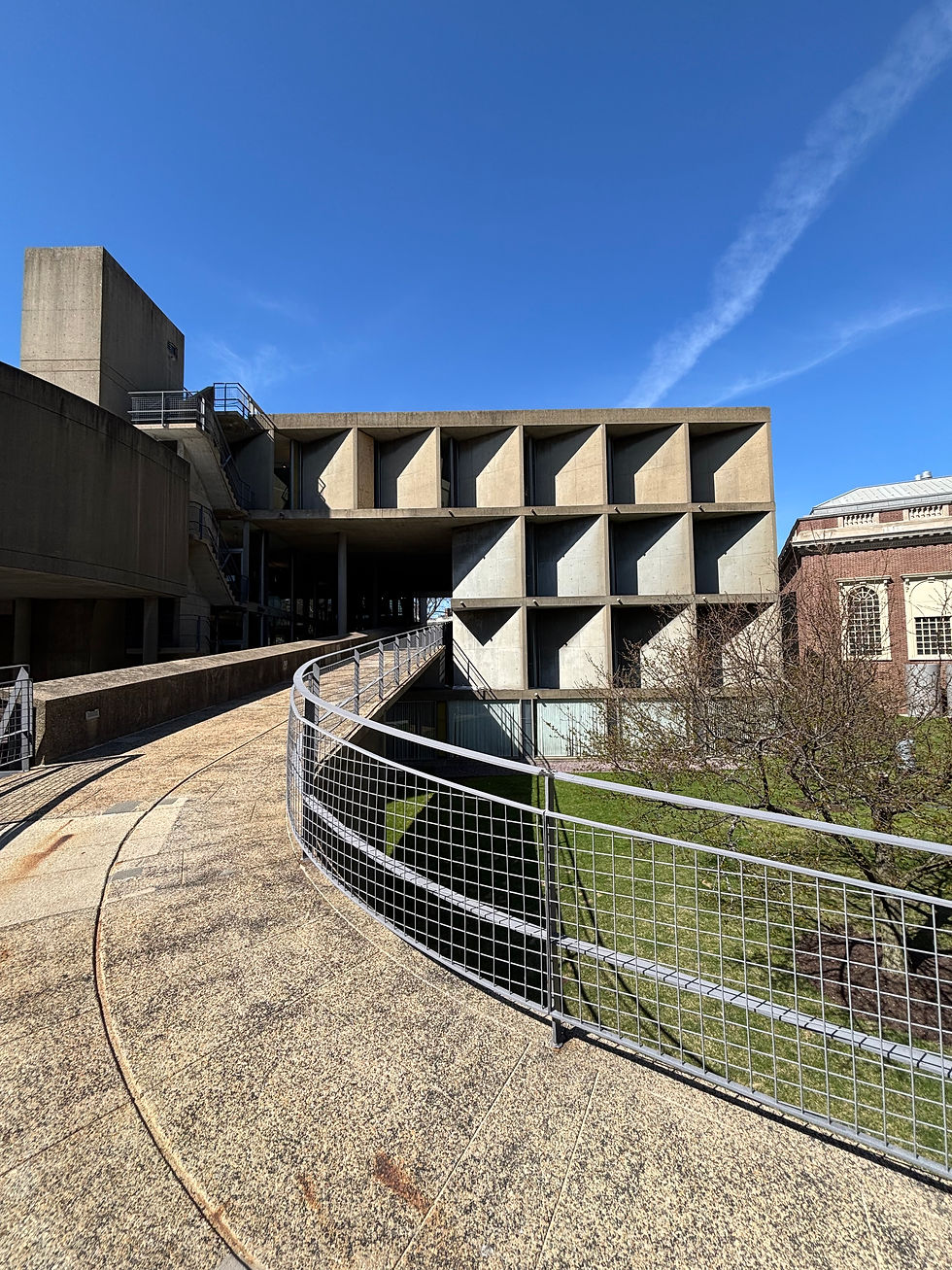
Earlier in the year, Boston offered another pause. Conversations with Rahul Mehrotra explored alignment between urban practice and pedagogy, while discussions at MIT with Yolande Daniels opened pathways for future collaboration and the possibility of hosting HTL’s podcast within academic space.
In February, James attended Joe Osae-Addo’s film launch at the Nieuwe Instituut in Rotterdam, extending the studio’s engagement with architecture as culture, memory, and documentation rather than object alone.
And in January, the year announced itself loudly:
Dezeen, alongside other international platforms, published an article on the Site Office pavilion, a project from the previous year that continued to circulate, provoke, and invite interpretation well into 2025.


Mid-year, we quietly began the process of registering a Non-Profit, Urban Design Archive; an acknowledgement that practices like ours must not only build forward, but preserve backward.
Not everything aligned perfectly.
We were invited to the London Design Festival, and separately by the European Cultural Commission to exhibit, opportunities deferred, not declined.
At the end of May 2025, James delivered a keynote at the Interior Design Association of Nigeria’s World Interior Day 2025 Summit, titled “Designing with Emotion, Building with Intelligence.”
The keynote, titled NEXUS, encapsulated the theme of the event, positioning our work at the intersection of two important extremes: Emotion (tradition) and Intelligence (technology).
This lecture adds to the body of talks James has delivered at professional institutes over the years, including NIA Archibuilt (2015) and GIA (2018).


2025 was not about arrival.
It was about testing materials until they failed, and testing ideas until they held.
It was about housing as dignity, bamboo as ambition, domesticity as ideology, and collaboration as practice rather than performance.
We end the year not louder, but clearer.
Not finished, but positioned.
And if this year proved anything, it is that the work will continue to stand, sometimes taller than expected.